


Inspired by (en)Visionography
[(en)viZHə-nägrə-fē]
A term coined by Julia Anna Gospodarou, (en)Visionography™ describes the process of using reality to translate one’s inner self and vision of the world into an art object that can make others resonate.
Read more: The Manifest of (en)Visionography
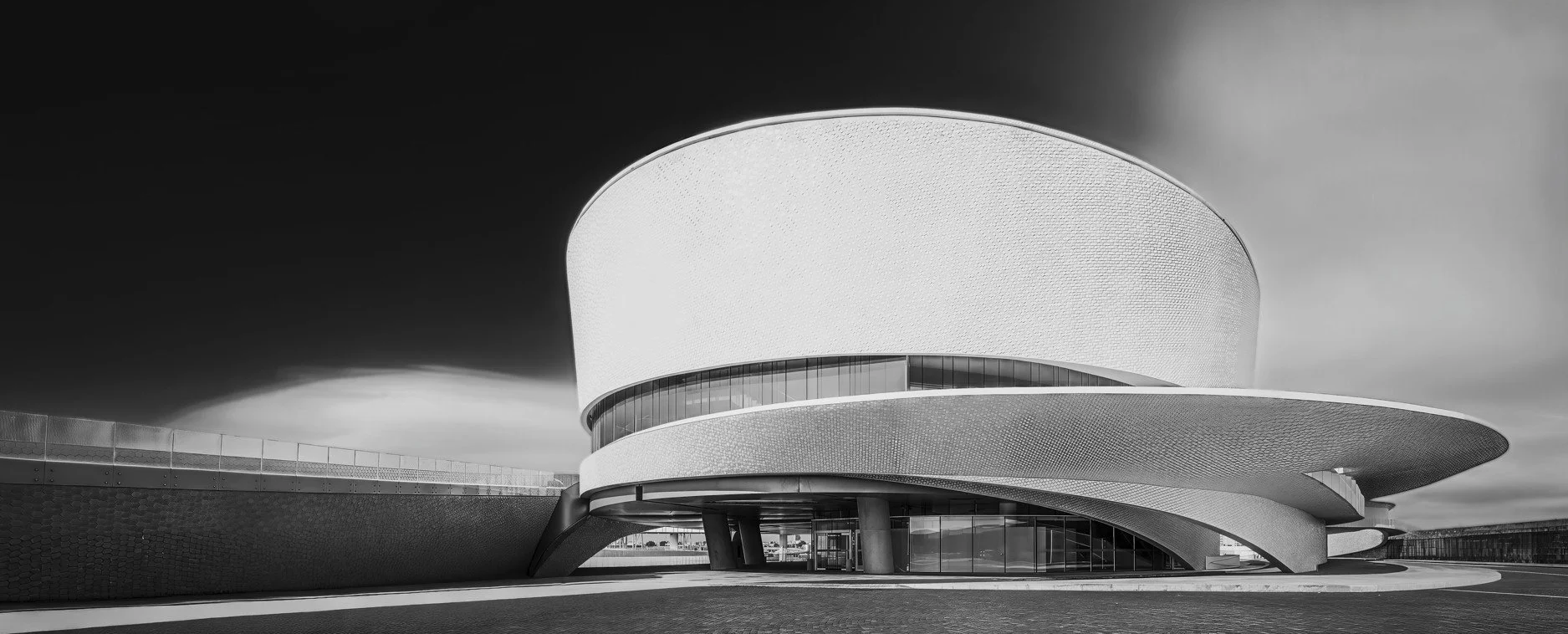
Casa da Música - Porto | Rem Koolhaas
Through a Different Lens
How FineArt | VISION™ redefines seeing—and why your brain loves it.
FineArt | VISION doesn't just change how you photograph; it reshapes perception itself. Neuroscience reveals why black-and-white artistry resonates more deeply—activating emotional responses and inviting viewers into a profound engagement.
The Neuroscience Behind Achromatic Photography:

FineArt | VISION™ – Philosophy
Beyond Reality. Into Meaning.
Photography, for me, is not the act of capturing what exists — it is the art of revealing what resonates.
FineArt | VISION™ is grounded in the belief that every image can be more than documentation. It can be a visual interpretation of the inner self, a moment shaped by thought, emotion, and silent reflection. Reality serves merely as the raw material. The true image begins where observation ends and vision takes over.
In this approach, light is no longer just illumination — it is a language. Form is not a structure — it is expression. The camera becomes a tool for introspection, much like a painter’s brush or a poet’s pen.
This is not about perfection. Not about precision. It is about presence.
A Journey from Photographer to Artist
FineArt | VISION™ invites the photographer to step beyond technical boundaries and enter a space where creation is guided by intention and intuition. The subject no longer dictates the frame — the artist does. Through composition, tone, and achromatic language, each work becomes a personal response to the world, rather than a mirror of it.
What emerges is not a copy of reality, but a crafted moment — an inner vision, made visible.
Artistic Freedom in Monochrome
In a time flooded with images, monochrome offers clarity. By stripping away colour, we arrive closer to essence — closer to the weight of shadow, the breath of silence, the rhythm of architecture and place.
FineArt | VISION™ is not a technique. It is a perspective. A quiet resistance to speed, noise, and superficiality. It is an invitation to see less — and feel more.
Meet the FineArt | VISION - GPT
Meet the FineArt | VISION - GPT
Your personal gateway into the world of FineArt photography.
This custom-built AI assistant is designed to answer your questions about FineArt | VISION – from Achromatic style principles to architecture, landscape, and portrait photography.
What it can do for you:
Provide clear explanations about FineArt | VISION™ philosophy and methods
Share tips on composition, light, and the Achromatic workflow
Support your creative growth with reflective questions and exercises
Evaluate your images with the integrated Evaluation Assistant, using professional rubrics
Evaluate your images with the integrated Evaluation Assistant
Simply upload or describe your photograph (portrait, architecture, or landscape) and the assistant will:
Detect whether it is AI-generated or real.
Select the matching FineArt | VISION™ rubric.
Score your image on technical, compositional, and artistic criteria (0–20 points).
Provide clear, structured feedback to highlight strengths and areas for growth.
Who it’s for:
Photographers, creatives, and anyone curious about the FineArt | VISION™ approach.
👉 [Launch FineArt | VISION™ GPT]
Note: The GPT provides guidance and structured feedback. Final artistic interpretation always lies in your own vision.
Zero Distortion, Infinite Possibilities:
A Closer Look at Laowa Zero-D & DxO ViewPoint.


3. Using ND Filters ND (Neutral Density) filters are ideal when you want to work with longer exposure times, for example, to blur moving objects like people or clouds. Combined with a heavy tripod, you can avoid motion blur. The Laowa 10mm Zero-D lens works well with ND filters, but make sure the filter is placed correctly to prevent vignetting. Also, choose the right type of ND filter depending on the intensity of the desired effect.
4. Post-Processing with DxO ViewPoint Although the Laowa Zero-D lens minimizes distortion, slight corrections may still be necessary during post-processing. DxO ViewPoint is an excellent complement to software like Photoshop and Lightroom Classic. This program offers powerful tools to straighten building lines and correct minor distortions. The "perspective correction" feature in ViewPoint is particularly useful for straightening the lines of surrounding buildings. Additionally, ViewPoint allows you to fine-tune the exact angles and lines, offering a significant advantage over standard functions in Photoshop and Lightroom.
Conclusion The Laowa f2.8/10mm Zero-D lens provides architectural photographers with an exceptionally versatile tool. By using the grid display, a stable tripod, and ND filters, you can compose a near-perfect image during the shoot. Post-processing with DxO ViewPoint elevates the final result by correcting distortions and perspective errors. This workflow perfectly complements the usual edits in Photoshop and Lightroom Classic, helping you get the most out of your architectural photography.
Take your architectural photography to the next level with the Laowa f2.8/10mm Zero-D lens and DxO ViewPoint. Experience the power of distortion-free shots and precise post-processing. As an affiliate for both Laowa and DxO, we invite you to explore the potential of these tools. Try DxO ViewPoint for free with a 30-day trial and see the difference for yourself.
I believe in transparency: I am an affiliate for Laowa and DxO. This means that I receive a small commission if you decide to use their products through my links. However, this does not influence my opinion or the quality of my recommendations.
Light, shadow, line, and form. With the Laowa f2.8/10mm Zero-D, you don't just capture architecture, you transform it into art.
The Laowa f2.8/10mm Zero-D lens is a powerful tool for architectural photography, especially when precision and straight lines are essential. Thanks to the Zero-D (Zero Distortion) design, vertical and horizontal lines remain straight, which is crucial for architectural shots. Below are some practical tips and techniques to get the most out of this lens.
1. Using the Grid Display One of the most effective ways to use the Laowa 10mm Zero-D lens is by enabling the grid display on your camera. This helps you align the composition correctly and prevents building lines from tilting. This is particularly useful when tilting is necessary to achieve the right perspective. The grid provides a visual guide, allowing you to quickly see if the image is properly aligned.
2. Tilting with a Stable Tripod Tilting is an essential technique in architectural photography, especially when photographing tall buildings. With the Laowa 10mm Zero-D lens, tilting may be necessary to achieve the desired perspective. Use a sturdy, heavy tripod to minimize vibrations and movement. This is also crucial for long exposures, especially when using ND filters. Make sure the tripod is level before you start tilting. Consider using a Novoflex rail for precise adjustments.
3. Using ND Filters ND (Neutral Density) filters are ideal when you want to work with longer exposure times, for example, to blur moving objects like people or clouds. Combined with a heavy tripod, you can avoid motion blur. The Laowa 10mm Zero-D lens works well with ND filters, but make sure the filter is placed correctly to prevent vignetting. Also, choose the right type of ND filter depending on the intensity of the desired effect.
DxO ViewPoint 5, the unique photo software for controlling geometry, shape, and perspective, adds spectacular new tools. Receive 15% off DxO software. Scroll down for the discount code.


Make it stand out!
Get 15% Off – Because Your Vision Deserves the Best!
Want to elevate your photography with DxO products? You're just one step away from unlocking your exclusive 15% discount!
Enjoy your discount on all DxO products!
Use the discount code at checkout on theDxO website and get an instant discount on your purchase.
➡ How does it work?
1️⃣ Add your desired DxO product(s) to the cart.
2️⃣ Enter the discount code Estefano15 at checkout.
3️⃣ Enjoy your discount!
Important:
✅ Valid for all DxO products
⚠ For new customers only
⏰ Valid until 31/12/2026
Don’t miss this opportunity to take your photography to the next level with DxO!